Eight centuries of Pišece Castle - from the Romanesque residential keep and the Knights of Pišece, through the Moscon barons, to restoration and the reopening to the public.
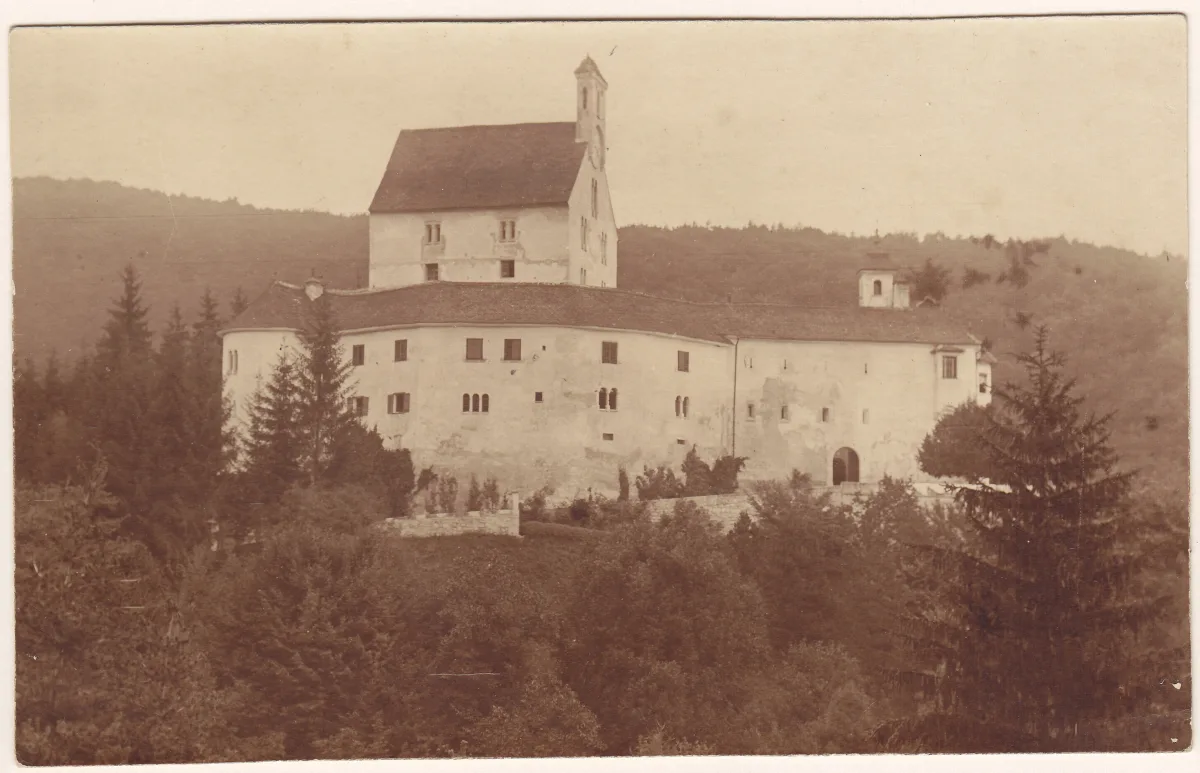
Early 13th century: The four-storey Romanesque keep was probably built, as indicated by the mason's marks on its exterior walls.
1268: The first indirect written reference to Pišece Castle, mentioning the Archdiocese of Salzburg vassals Conrad I of Pišece and Eckhart of Pišece. The Knights of Pišece attained the noble rank of lords by the time of William of Pišece at the latest.
1309: The Archbishop of Salzburg, Conrad IV, instructed Ortolf, the Sevnica caretaker, to compile a rent roll. Among the 19 individuals named in it, the only woman mentioned is the Lady of Pišece.
1349: Gundakar III of Turn near Velenje was mentioned as the castellan of Pišece Castle, with the Lords of Pišece no longer appearing in the records.
14th-16th centuries: Pišece Castle and seigniory were managed as part of the estates owned by the Archdiocese of Salzburg, which entrusted the estate to various stewards, lien-holders and leaseholders.
Early 16th century: The Moscons, a merchant family from the area around Bergamo in Italy, came to Slovenian lands.
Mid-16th century: Franz Moscon married Katharina Franziska Valvasor, sister of Hans Baptist Valvasor, a wealthy supreme provisioning master in the Military Frontier.
1581: Through the inheritance from Hans Baptist Valvasor, the Moscon family acquired property in the town of Telgate, the Torre Passeri tower, Šrajbarski Turn Castle, rights to the Laško estate, a house with a garden and meadow in Ptuj, and probably the Klevevž estate as well.
1595: Innozenz Moscon purchased Pišece Castle and estate, together with the Sevnica and Reštanj estates.
1617: Innozenz Moscon's branch of the family was elevated to the baronial rank.
1753: Johann Jakob Moscon established a fideicommissum, securing the estate as an indivisible hereditary family property.
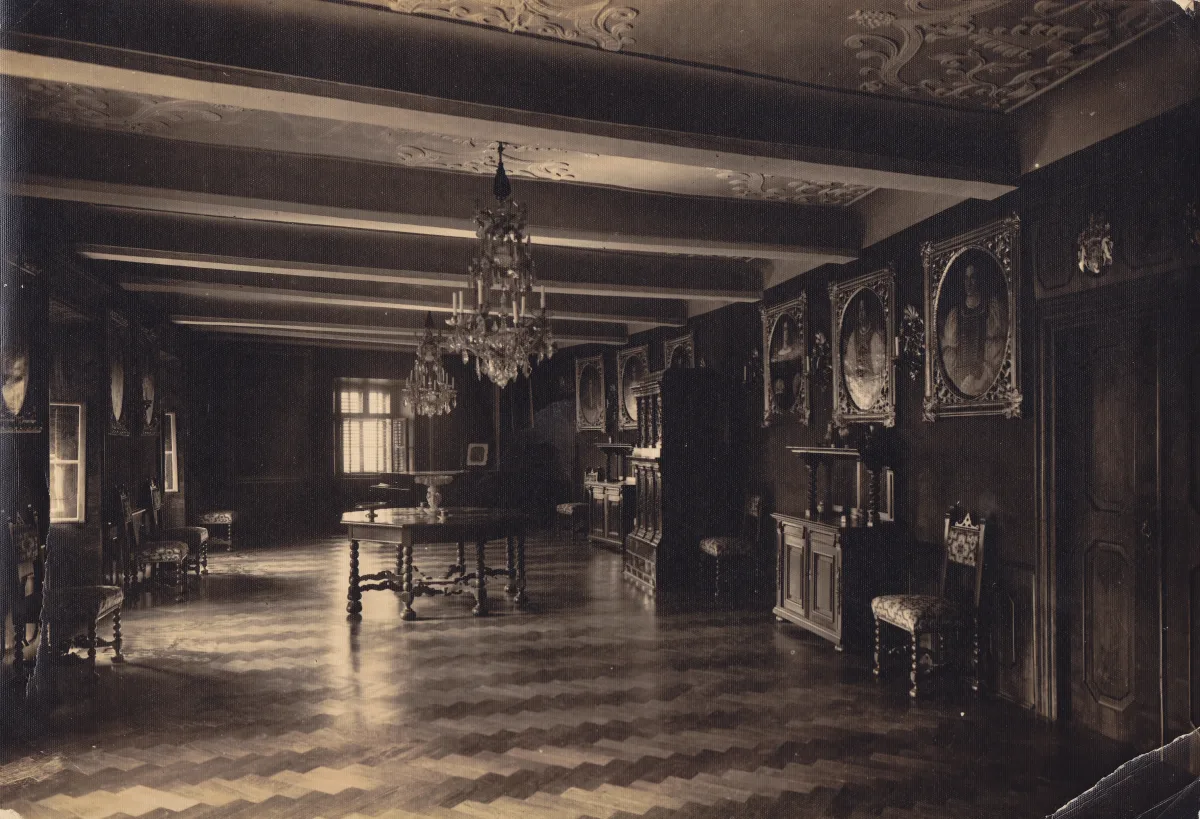
Third quarter of the 18th century: The frescoes in the Chamber of Castles were created, depicting 26 castles and estates belonging to different branches of the Moscon family.
1927: The death of Julian Alfred Moscon, the Moscon family's last male-line descendant.
1938: Alfred Buttlar-Moscon, the last descendant through the female line, was forced to sell Pišece Castle.
1945-1998: Residential units were established in the castle.
1999: The castle was declared a cultural monument of national significance owned by the Republic of Slovenia.
2005: Extensive restoration of Pišece Castle began.
2026: The first part of the castle opened to the public. It is managed by Posavje Museum Brežice, with the support of the Municipality of Brežice and under an agreement with the Ministry of Culture of the Republic of Slovenia.